The short answer for Vegas pools
In Las Vegas, shock your pool roughly every 1–2 weeks from May through September, and once a month from October through April. That's 2–3x the national average — because UV intensity, water temperature, and bather load here all work against your sanitizer.
Then there are event-driven shocks: after a monsoon dust storm, a heavy pool party, a fill-up, or any time free chlorine drops below 1 ppm. Those don't replace the schedule — they're additions to it.
What 'shocking' actually means
Shocking is just raising free chlorine to roughly 10x your combined chlorine (or to ~10 ppm if you can't measure combined). The goal is to burn through chloramines — the bound, smelly, irritating chlorine compounds that build up between shocks and stop killing pathogens.
If your pool smells strongly of chlorine, that smell is chloramines. The fix is more chlorine, not less.
Liquid chlorine beats cal-hypo in Vegas
Cal-hypo (granular shock) adds calcium to water that's already too hard. Trichlor shock adds CYA that's already creeping up by August. Liquid chlorine (12.5% sodium hypochlorite) adds neither — just chlorine and a tiny bit of salt.
A 1-gallon jug of pool-grade liquid chlorine is $5–$8 at Leslie's or a pool wholesaler and shocks a 15,000-gallon pool to ~10 ppm. Buy it the day you use it — liquid chlorine loses 5–10% strength per month sitting in your garage.
The shock-cadence checklist
When in doubt, shock if any of these are true:
- Free chlorine has dropped below 1 ppm
- Combined chlorine is above 0.5 ppm (or your kit reads any combined)
- Water has a chlorine smell or burns swimmers' eyes
- Water looks dull or slightly cloudy
- It's been 7+ days of 100°F+ weather since your last shock
- Just had a dust storm, pool party, or someone got sick in the pool
Shock the right way
Shock at dusk, not noon. UV destroys 80% of the chlorine you just added within a few hours if you do it in daylight. Run the pump for at least 8 hours after shocking so it actually circulates.
Don't swim until free chlorine is back under 5 ppm — usually the next morning. And re-test 24 hours later; if chlorine is back at zero, you didn't shock hard enough or you have an algae bloom starting under the surface.
If shocking stops working
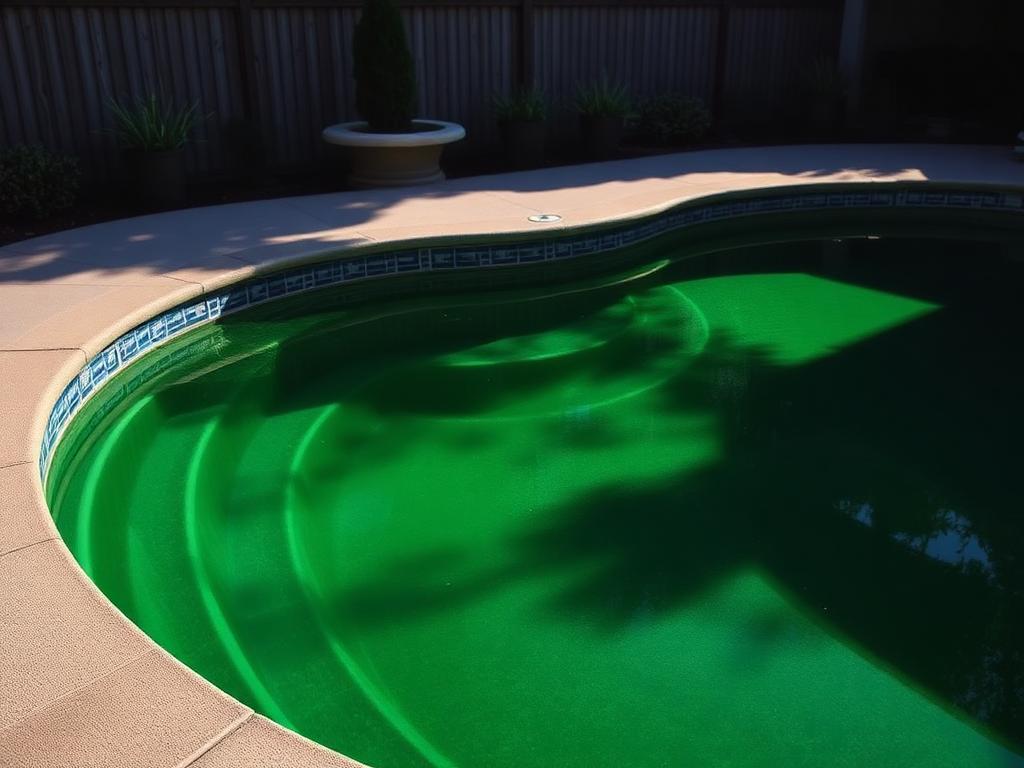
If you shock and free chlorine reads zero the next day, your CYA is probably above 80 ppm and chlorine is being 'locked' by it. No amount of shock will fix that — you need a partial drain. Same outcome if the pool turned green: it's faster and cheaper to bring in a Green Pool Recovery than to keep dumping chlorine into water that can't hold it.
Want us to handle it?
We'll diagnose, dose, and dial in your pool — so you don't have to remember any of this.
Get a free quote